

-
Image
-
Image
-
Image
-
Image
-
Image


Zogan (象嵌): Traditional Japanese Metal Inlay
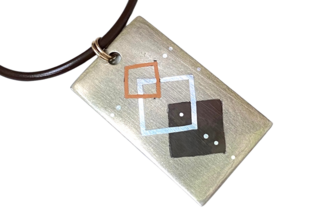
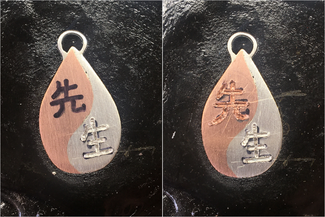
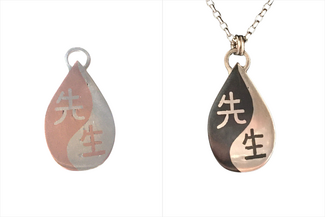
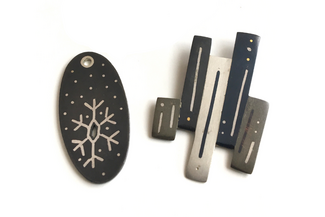
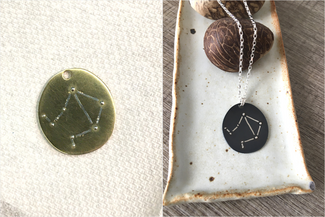
Explore the ancient art of Japanese "Zogan" (象嵌), or "inlay." In this class, you will learn the basic process of traditional Japanese metal inlay techniques, ten-zogan (点象嵌 dot inlay) and sen-zogan (線象嵌 line inlay). A few different types of dot and line inlay will be covered: flush and dome dot inlay, as well as two different size straight line inlays. Students will learn to inlay copper and fine silver wire into the brass sheet. This class will also cover the tools and materials specific to this traditional form, including special chisels. Attention will also be given to tool maintenance and the instructor will show how to sharpen the chisel tips. Students will come away with a series of samples and the skills to create their own finished zogan jewelry.
This virtual course is great for beginners and experienced makers alike; it covers the basics, while also offering the opportunity for skill refinement.
For more information about virtual courses, visit our Virtual Course FAQ page.
Meet the instructor

Momoko Okada was born and raised on a dairy farm in Hokkaido, Japan. Momoko began studying metals and glasswork in the U.S. and the U.K. and received B.F.A. from Southern Illinois University. Then she started to realize that the importance of her Japanese heritage and began studying traditional Japanese metals techniques at Kanazawa College of Art. After receiving M.F.A. in Japan, she continued her graduate study on differences of Eastern and Western aesthetics and metals techniques at Bowling Green State University. She has been practicing the traditional Japanese metalsmith work for over 15 years. One of the traditional metals techniques that she uses is called "Zogan" and it means inlay. Metal inlay technique is a process to imbed wire or sheet metal into a different metal without heat.
In 2015, Momoko and her master teacher, Kazuo Kashima (5th generation master of Nunome Zogan technique) decided to spread the technique beyond Japan to keep these beautiful tradition from disappearing. Momoko started to offer classes and workshops on those traditional metal inlay techniques at Portland parks and recreation, various schools and privately to spread the knowledge to the Western artists. In 2016, since the inlay tools and materials are hard to obtain in the U.S., she created an online store, Momokoya.com, to help students to maintain their skills and to achieve their goals. She relocated her studio to Tucson AZ in 2018 and start teaching at Tucson Parks & Rec. and Pima Community College.
In 2024, Momoko moved back to Japan to save her parents dairy farm and ice-cream business. Momokoya.com has been sold to her student, however, she still helps out as consultant and keeping the business going. This will be her first online workshop from Japan!
Her work can be found on "Lapidary Journal - Jewelry Artist" May/June 2020 issue and is on the cover. 500 Metal Vessels: Contemporary Explorations of Containment, Lark Books.
Materials & Tools
The following supplies will be used for course demonstrations and objectives. A suggested item and/or vendor has been provided below for reference. Click the vendor name to be redirected to a page where you can view the item. The quantities needed for each item are listed first. If ordering, please be aware that some items may come in larger quantities than needed for this class. We recommend not opening an item's packaging until the day of the workshop. Student participation during or in-between class sessions is encouraged but not required.
Raw Materials/Consumables:
- 2x 2” x 2” sheet of brass, 16ga or thicker (Contenti)
- 1ft (minimum) of fine silver wire, 20ga (RioGrande)
- 1ft (minimum) of fine silver wire, 22ga (RioGrande)
- 1ft (minimum) of copper wire, 20ga (Contenti)
- 1ft (minimum) of copper wire, 22ga (Contenti)
Specialized Tools/Equipment:
- 1 x Otafuku Hammer,15mm (Momokoya)
- Japanese black pitch on wooden board (Momokoya)
- Non-slip rubber mat for putting your board on so it doesn't move while you work - cheaper options with smaller dimensions can be found at a general or even dollar store (amazon for example)
- Files:
- Beading tools
- Drill bits
- Various inlay chisels
- Inlay Chisels set - approximately $110 plus s&h - made by Bill Dawson specifically for this class. Registered students should contact him directly to purchase - [email protected]. Chisel sets will be ready and ship out by December 30, 2025.
- Push Chisel
- 18ga Line Chisel
- 22ga Line Chisel
- Straight Line ARI Chisel
- Inlay Chisels set - approximately $110 plus s&h - made by Bill Dawson specifically for this class. Registered students should contact him directly to purchase - [email protected]. Chisel sets will be ready and ship out by December 30, 2025.
- Sharpie marker - at least 2 different colors in fine and super fine tips (amazon)
- For Salt Tanpan
- 1 x ruler
- 1 x flush cutters (RioGrande)
- 1 x metal scribe (RioGrande)
- 1 x centerpunch (RioGrande)
- 1 x pin vise / hand drill (RioGrande)
- Optivisors or other magnifying visor (for example RioGrande)
- cloth or towel to wipe metal
- rubber mat
- OPTIONAL items: The following items are not needed for this workshop but will be important to have if you want to keep learning inlay techniques
- Loupe with scale, optional for the beginners - will be used to check the tip of the chisels (amazon)
- Horning oil, or any machine oil would work - for maintaining the sharpness of the chisels (Sharpeningsupplies)
- Translucent Hard Arkansas stone (3x1”) - for maintaining the sharpness of the chisels (Sharpeningsupplies)
- Japanese flat files
Basic Hand Tools:
- 1 x round nose pliers (RioGrande)
- 1 x chain nose pliers (RioGrande)
- 1 x flat nose pliers (RioGrande)
- 1 x snips / flush cutters (RioGrande)
- 1 x jewelers saw (RioGrande)
- 1 x pack saw blades - 2/0 (RioGrande)
- 1 x burlife / bee's wax (RioGrande)
- 1 x bench pin (RioGrande)
- 1 x half round hand file - #2 cut (RioGrande)
Basic Home Studio:
- 1 x rotary tool - flex shaft, micro motor, etc. (RioGrande)
- 1 x set of needle files - #2 cut (RioGrande)
- 1 x half round forming pliers (RioGrande)
- 1 x center punch (RioGrande)
- 1 x scribe (RioGrande)
- 1 x ring clamp (RioGrande)
- 1 x rawhide / plastic mallet (RioGrande)
- 1 x riveting hammer (RioGrande)
- 1 x chasing hammer (RioGrande)
- 1 x steel block / steel surface (RioGrande)
- 1 x small steel ruler (RioGrande)
- 1 x sheet of sand paper - 220 to 600 grits (Amazon)
- 1 x calipers - optional / nice to have (Amazon)
- 1 x dividers - optional / nice to have (RioGrande)
- 1 x sanding sticks - optional / nice to have (RioGrande)
- 1 x parallel pliers - optional / nice to have (RioGrande)
Basic Soldering/Torch Set-Up:
- 1 x fireproof area - steel sheet, tiles, etc. (Amazon or Home Depot)
- 1 x Solderite™ pad / pan with pumice (RioGrande or RioGrande)
- 1 x torch - Smith mini, Silversmith, or butane (RioGrande or RioGrande)
- 1 x #0 or #1 torch tip - if getting Silversmith (RioGrande)
- 1 x striker or lighter - Silversmith system has one (RioGrande)
- 1 x pickle - sodium bisulfate or citric acid (RioGrande or Amazon)
- 1 x brass bristle brush (RioGrande)
- 1 x crock pot or lidded glass container (RioGrande or Amazon)
- 1 x tempered glass container or sink - for quenching and rinsing
- 1 x liquid hand soap - for cleaning metal
Other/Miscellaneous Tools:
- hard work surface
- fan and open window - or ventilation system
- safety glasses
- pencil, Sharpie, notebook
- rags/towels